 Live: 3 trận đang diễn ra
How the 48-Team Format Actually Works
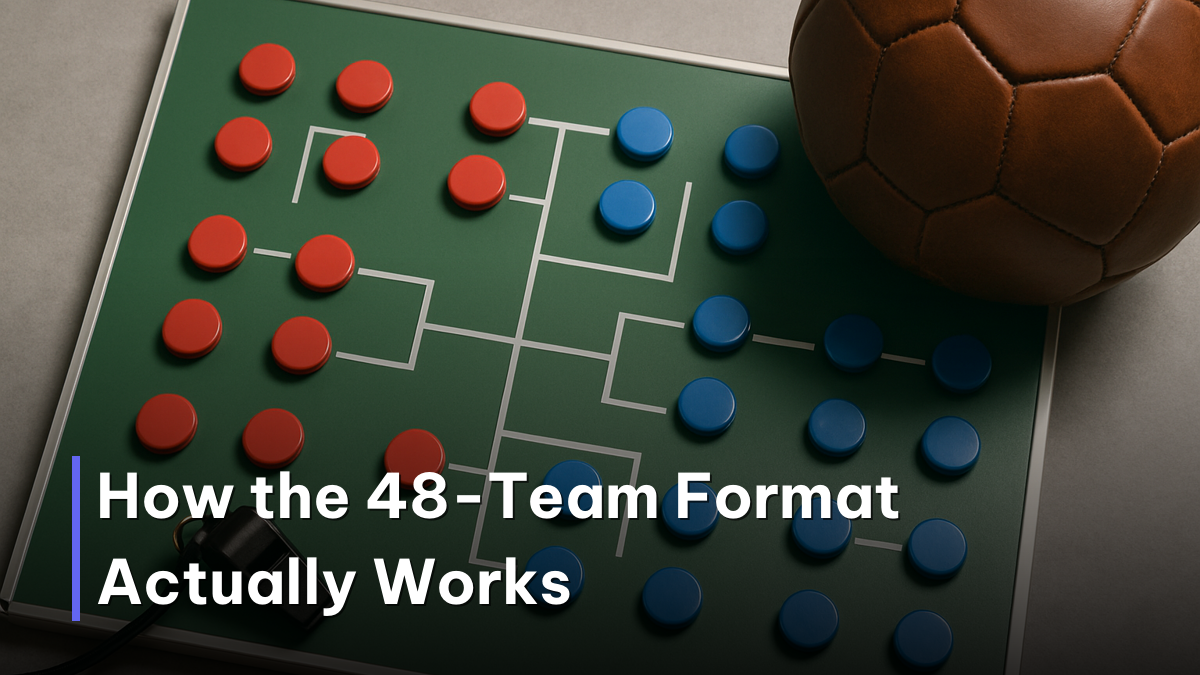
Worldcup 2026 is the first edition to swell from 32 to 48 teams, and that single change rewires almost everything about the tournament. More teams means more matches — 104 of them, up from the 64 we sat through in Qatar. That’s a lot of extra football crammed into a summer.
The structure splits those 48 sides into 12 groups of four. Top two from each group march on automatically, and then the eight best third-placed teams sneak through as well. Add it up and you get a fresh round of 32, a knockout stage longer than anything the competition has seen.
Here’s the catch most people miss. A third-placed finish no longer guarantees you go home. Coaches will gamble differently, dead-rubber matches mostly vanish, and a single late goal in some far-flung group can ripple across the whole bracket. For supporters, worldcup 2026 turns the group stage into a maths puzzle worth following closely.
FIFA scrapped an earlier three-team group idea — too easy to manipulate — and landed on this format instead. You can read the official breakdown over at Wikipedia’s 2026 World Cup page if you want the dry version.
Three Countries, Sixteen Cities: The Host Map
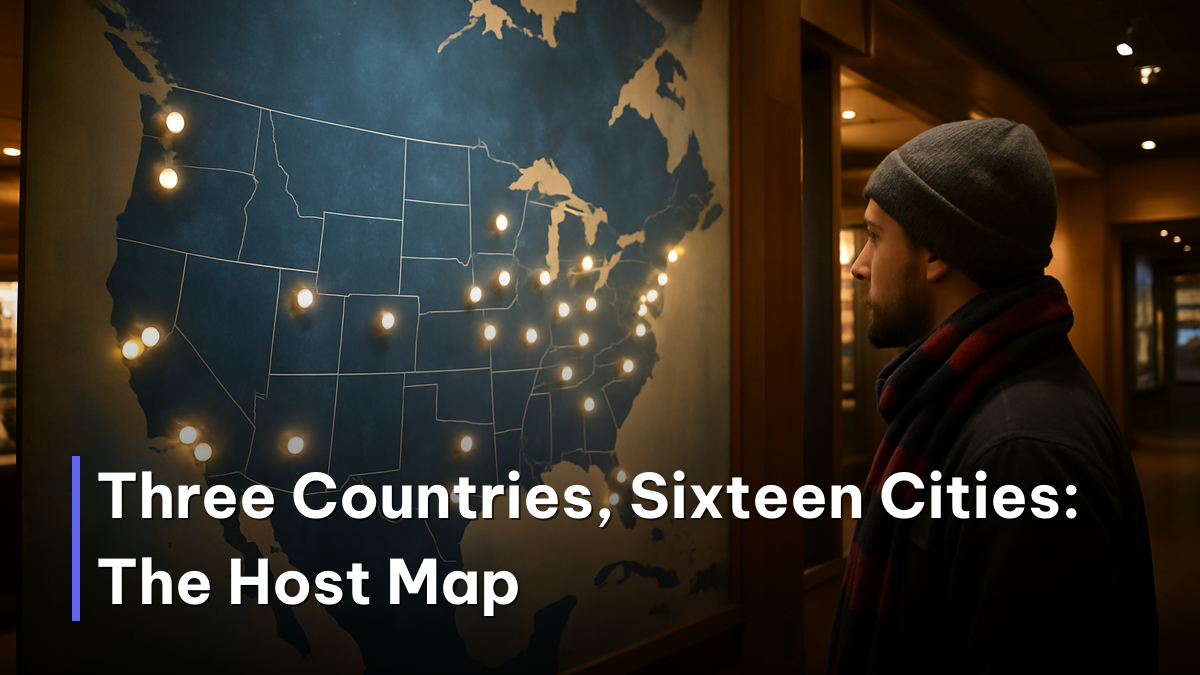
For the first time ever, three nations share hosting duties. The United States, Canada and Mexico split worldcup 2026 across 16 cities, and that geography alone is a story.
Eleven cities sit in the US — think New York/New Jersey, Los Angeles, Dallas, Atlanta, Seattle and Miami among them. Mexico chips in three: Mexico City, Guadalajara and Monterrey. Canada rounds it out with Toronto and Vancouver.
The scale is genuinely huge. Vancouver to Mexico City is roughly 4,000 kilometres, so a team that draws an unlucky travel schedule could rack up frequent-flyer miles that’d make a touring band jealous. Jet lag and climate swings — humid Miami one week, mile-high Mexico City the next — will quietly shape who fades in the second half of matches.
FIFA clustered fixtures regionally to soften the blow, grouping teams so they don’t bounce coast to coast every few days. Still, if you’re planning to follow one nation across worldcup 2026, budget for long-haul flights and check our related travel guide before booking anything.
Who’s Qualified and the Underdogs to Watch in Worldcup 2026
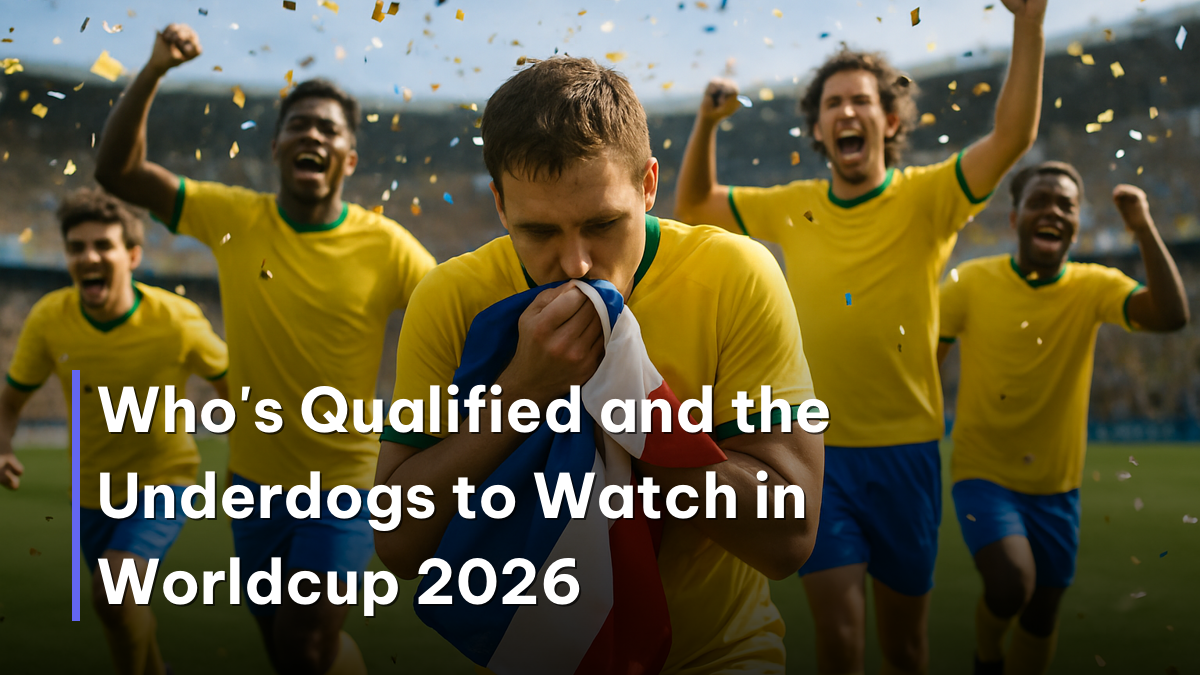
Forty-eight slots changes the qualification arithmetic completely. Every confederation got more room, and that’s where worldcup 2026 starts to feel democratic.
UEFA carries 16 European places. Africa’s CAF jumps to nine direct spots — a meaningful leap that throws the door open for nations who’d previously fall agonisingly short. Asia, North/Central America and the Caribbean, and the play-off route all expand too.
That extra breathing space matters most for the smaller footballing countries. A handful of debutants could finally appear on the biggest stage, and there’s real romance in that. Imagine a first-time qualifier walking out in front of 80,000 people, their flag flying at a World Cup for the very first time.
Don’t sleep on the supposed minnows either. Expanded tournaments historically produce one or two giant-killings, and worldcup 2026 has 104 matches’ worth of chances for chaos. The underdog with nothing to lose is the most dangerous thing in football.
Stadiums Worth Circling on Your Calendar
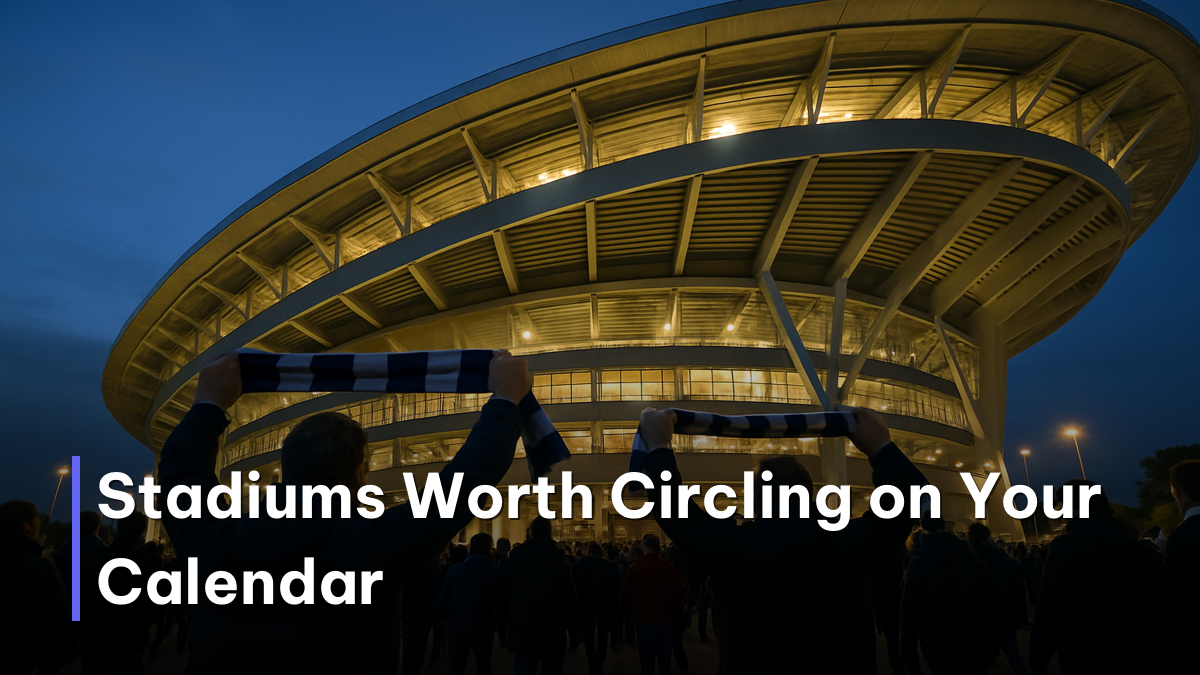
The venues for worldcup 2026 range from glittering modern domes to one stadium dripping in history. If you only memorise a few, start with the bookends.
The final lands on July 19, 2026, at MetLife Stadium in East Rutherford, New Jersey — an 82,500-seat giant just outside New York City. It’s a fitting closer, big and brash, exactly the kind of stage a final deserves.
Then there’s Estadio Azteca in Mexico City. When it opens the tournament in June 2026, it becomes the first stadium ever to host matches across three separate World Cups — 1970, 1986 and now. Pelé played there. Maradona scored the ‘Hand of God’ there. That’s hallowed ground.
Elsewhere, expect AT&T Stadium in Dallas, SoFi Stadium in Los Angeles, and the converted NFL cathedrals to deliver atmosphere and air-conditioning in equal measure. For the official venue list, FIFA keeps it updated on FIFA.com.
Tickets, Costs, and Planning a Trip

Now for the part that makes wallets nervous. Worldcup 2026 ticketing has already stirred up grumbling, mostly around dynamic pricing — the system that lets prices float up and down with demand, like airline seats.
The worry is simple. A blockbuster knockout match could see face values balloon well beyond what an ordinary fan can stomach, pricing out exactly the people who give the tournament its noise and colour. Plenty of supporters’ groups have pushed back hard.
Beyond the tickets themselves, the real spend hides in logistics. Internal flights across three countries, hotels that triple their rates, border crossings, rental cars — it stacks up fast. Following a single team through worldcup 2026 could easily run into five figures.
My honest advice: pick a host city, base yourself there, and soak up several matches locally rather than chasing your team everywhere. You’ll spend less, sleep more, and actually enjoy it. Set price alerts early and never book the first flight you see.
Players and Storylines Heading Into Summer 2026

Every tournament is a snapshot of a generation, and worldcup 2026 catches several careers at a fork in the road. Some legends will be chasing one last dance; others will arrive at their absolute peak.
By summer 2026, the veterans who lit up the last decade will be reading the calendar nervously. A few stars who were untouchable in 2022 may be a half-yard slower, leaning on craft instead of pace. Whether they still start or shift to cameo roles will define their legacies.
Meanwhile, the new wave will be hitting full stride — players in their early-to-mid twenties who’ve spent two seasons terrorising European defences. Expect at least one breakout name nobody outside hardcore fans currently knows. That’s how it always goes.
The bigger storyline, though, is the format itself. With 48 teams and 104 matches, worldcup 2026 hands more nations a genuine stage, more players a debut, and more fans a reason to care. It’s messier, longer, and far more unpredictable — and honestly, that’s exactly what makes it worth circling on the calendar.