 Live: 3 trận đang diễn ra

How Far Apart Are the Host Cities, Really?
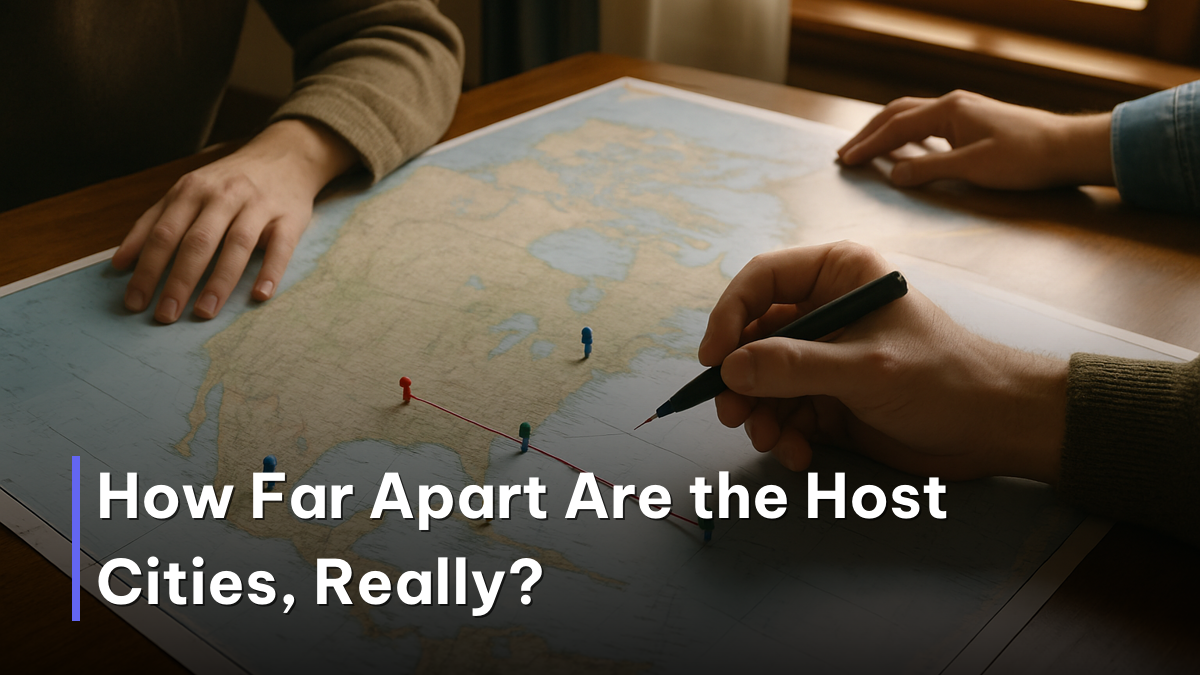
Planning World Cup 2026 transit between host cities starts with one humbling fact: the map is enormous. This tournament spreads 104 matches across 16 cities in three countries — 11 in the United States, three in Mexico, and two in Canada — from June 11 to July 19, 2026.
Vancouver to Mexico City clocks in at well over 3,000 miles. That’s not a road trip. That’s a five-and-a-half-hour flight, minimum, with a connection most of the time. Even “close” pairs surprise people. Dallas to Kansas City is around 500 miles. Atlanta to Miami is roughly 660.
So before you fall in love with a fixture, measure the gap. The geography is the single biggest cost driver of any multi-match trip, and it decides whether you’re booking a cheap bus ticket or an overnight red-eye you’ll regret.
Why World Cup 2026 Transit Between Host Cities Almost Always Means Flying
For most itineraries, World Cup 2026 transit between host cities will involve a plane, and there’s no romantic way around it. The continent simply doesn’t have the dense high-speed rail that lets European fans hop from Munich to Milan in an afternoon.
Say you want to see a group match in Seattle, then a knockout tie in Mexico City four days later. Driving is fantasy. The flight is your only sane choice, and you’ll likely route through a hub like Los Angeles or Houston.
The big hubs serving these venues — LAX, Dallas-Fort Worth, Atlanta’s Hartsfield-Jackson, Toronto Pearson, and Mexico City’s AICM — already rank among the busiest airports on earth. Expect packed terminals and surge pricing during the tournament window.
My blunt advice: book the long-haul legs early, even before you’ve nailed match tickets, then adjust. Refundable fares cost more upfront but save you when the bracket shifts. For background on how spread out the venues are, the 2026 FIFA World Cup overview is a useful starting reference.
Trains, Buses and Driving — Where Ground Transit Actually Works
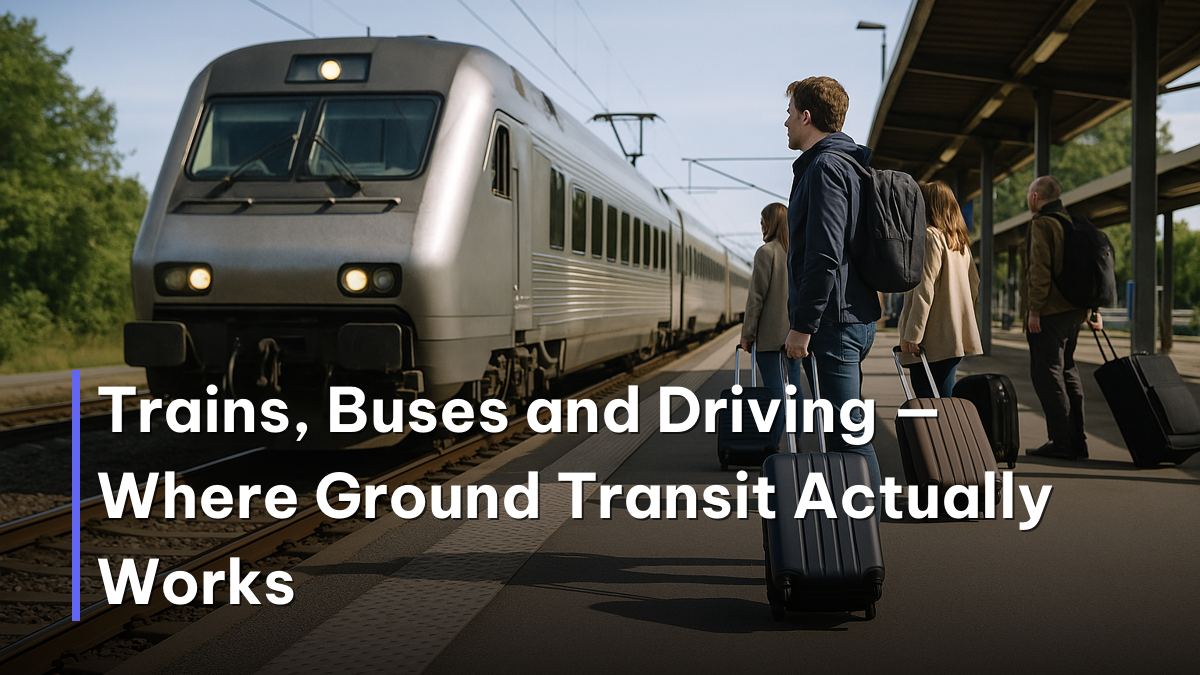
Not every leg demands a flight. A few regional clusters reward fans who keep their feet on the ground, and the savings can be real.
The Northeast is the sweet spot. Amtrak’s Northeast Corridor links New York, Philadelphia and Boston with frequent, reasonably quick trains — no airport security theatre required. On the West Coast, the Cascades route ties Seattle toward Portland and Vancouver, though it’s slower than driving.
Buses fill gaps too. FlixBus and Greyhound run cheap intercity routes, and during a tournament that draws millions of extra travellers, a $40 bus seat can beat a $250 last-minute flight.
But here’s the catch. The US has no true high-speed network connecting host cities, so anything beyond a few hundred miles becomes a grind. A train from Dallas to Kansas City exists in theory and barely in practice. For long jumps, rail is romantic and impractical. Pick it only for short, dense corridors.
Crossing Borders Between the US, Mexico and Canada
The cross-border legs are where casual planning goes to die. Moving between US, Mexican and Canadian venues means paperwork sorted long before kickoff.
Everyone needs a valid passport. Beyond that, your nationality dictates the rest: many visitors need a US ESTA or visa, a Canadian eTA for flights into Toronto or Vancouver, and they must check Mexico’s entry rules. Each has its own application window and fee, so don’t leave it to the week before.
The US State Department’s travel site is the authoritative place to confirm your exact requirements. Sort this first — visa delays can quietly wreck an otherwise perfect itinerary.
Border Tips That Save Hours of World Cup 2026 Transit Between Host Cities
Fly into and out of each country rather than crossing land borders by car on match day — driver queues at busy land crossings can swallow an entire afternoon. Build a buffer day around any international hop. And keep digital and paper copies of every approval. If you’re mapping a full route, our related travel planning guide walks through buffer days in more detail.
Building a Regional Match-Following Route That Won’t Break You

The smartest fans don’t chase one team blindly across the continent. They cluster. Organisers grouped matches partly by region to cut team travel, and that quirk works in your favour too.
Think of four loose buckets. A West Coast loop strings together Los Angeles, the San Francisco Bay Area, Seattle and Vancouver. A Central/Texas cluster covers Dallas, Houston, Kansas City and Atlanta. The East ties New York/New Jersey, Philadelphia, Boston and Miami. And the Mexico trio of Mexico City, Guadalajara and Monterrey forms its own pod.
Pick one bucket per week and you slash both cost and exhaustion. A West Coast loop keeps your flights short, your time zones stable, and your overnight red-eyes to zero.
The itinerary I’d warn against? A zigzag that flings you from Miami to Seattle to Monterrey in six days. You’ll spend more on flights than tickets and watch half your matches half-asleep.
Cost and Booking-Timing Realities
Millions of extra travellers compress into a five-week window, and prices behave accordingly. Treating World Cup 2026 transit between host cities like a normal holiday booking is the fastest way to overspend.
Rough ranges to budget around: short regional flights might sit at $120–$300 when booked early, but balloon past $600 last-minute. Long cross-country or cross-border legs can run $400–$900. Rental cars during peak weeks often double their usual rate, and one-way drop-off fees between cities are brutal.
Book flexible flights months ahead. Reserve rental cars early too, because fleets in host metros will sell out and dynamic pricing punishes the late. Trains and buses hold prices steadier, another reason to favour ground transit on those short eastern and western hops.
One honest tip: lock accommodation and transport before you’ve confirmed every ticket. You can cancel a refundable hotel. You cannot conjure a sold-out flight the night before a quarter-final.
Getting From Airport to Stadium in Each Host City
Landing is only half the battle — the airport-to-stadium dash varies wildly by city, and it shapes how stressful World Cup 2026 transit between host cities really feels on match day.
Some venues are a dream. Seattle’s Lumen Field sits beside a light-rail line straight from the airport. MetLife Stadium near New York is reachable on NJ Transit. Vancouver and Toronto both offer solid public transport links toward their venues.
Others leave you stranded without wheels. AT&T Stadium in Arlington, Texas has no passenger rail at all — it’s rideshare, shuttle, or rental car, and traffic on game day is no joke. Plan a generous cushion there.
Before each match, check whether your host city is rolling out tournament shuttles or expanded transit service for 2026; several are. Screenshot the route the night before, keep small local cash for transit fares, and aim to arrive at the stadium two to three hours early. Your future self, beer in hand and seat secured, will thank you.